Examples — a fixed starter list, not trending, not recommended, not your history. Verdicts are live.
↑↓ to move↵ to openesc to close/ opens this anywhere` toggles the terminal
Morning Digest · · built 8:24 AM ET
Tech rout drags market lower; crypto mixed on halal portfolio.
Friday's session saw Tech tumble 7.3% and Communication Services drop 2.7%, pulling the broader market into the red across most sectors. Consumer Staples held up best, gaining 0.7%, while Financials fell 1.8% and Materials dropped 2.2%. On the stock side, compliant names like Alphabet (GOOG/GOOGL) and Intel (INTC) made headlines, though non-compliant context-only stories dominated the news flow across biotech, energy, and consumer names.
Headline and summary drawn from the data on this page. Not financial advice.
S&P 500
6,910.39 -3.70%
Nasdaq
22,617.73 -5.28%
Dow
48,147.33 -1.93%
10-Year yield
4.912% -2.77%
Bitcoin
$61,209.45 +0.92%
Ethereum
$1,721.79 +1.23%
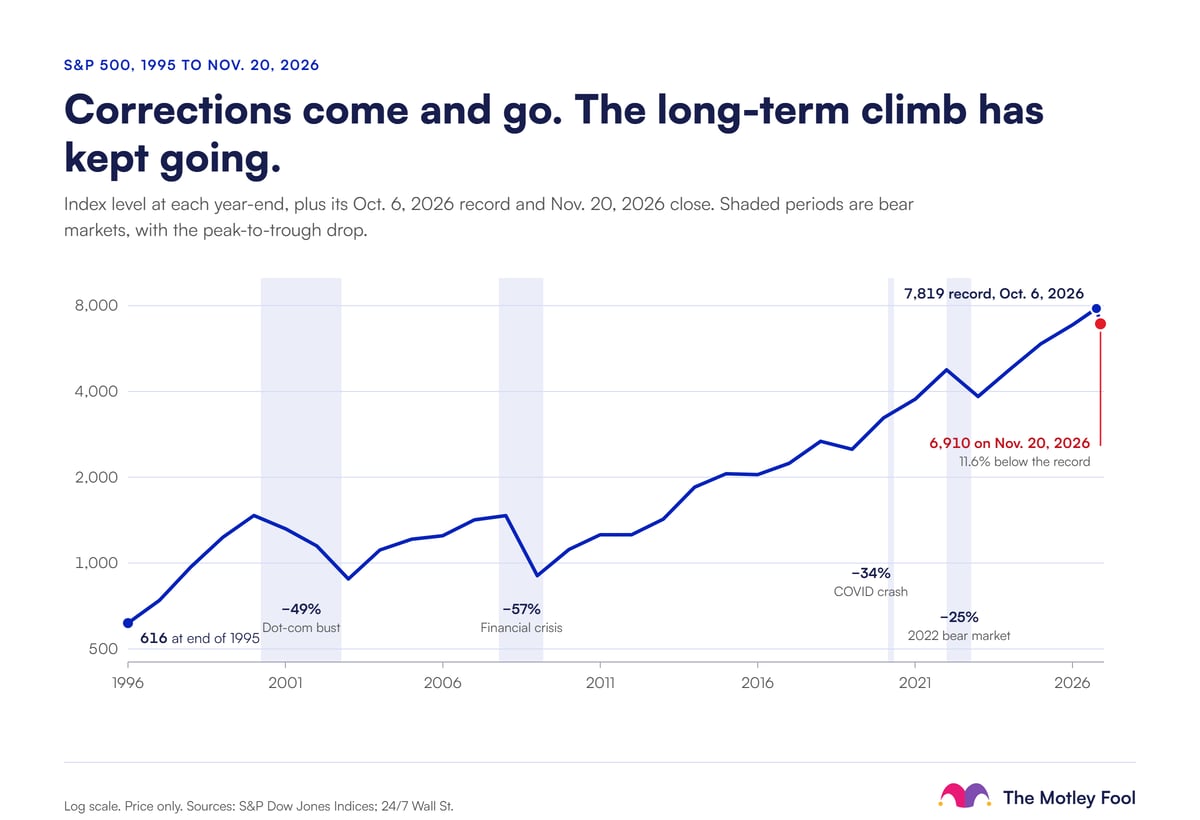
Markets: The S&P 500 fell 3.7% and the Nasdaq sank 5.3% on Friday, extending a week that sent the benchmark into correction territory. The 10-year yield dropped 14 basis points, signaling renewed caution about growth and rates.
Values when this issue was written, change since the previous close; the [bracket] is the price now, green if higher and red if lower. Prices from Yahoo Finance.
The market, in plain English
The 24 most-covered companies of the last 24 hours, halal or not, because they all move the market. The pill beside each ticker is our own screen.
Nvidia's CEO is stepping down, Anthropic just had the biggest IPO ever, and Intel says it's got a first customer for its foundry chips. After a bruising week that pushed major indexes into correction territory, there's real uncertainty about whether Big Tech's massive AI spending is actually paying off—and what comes next.
A brutal week ended Friday with the market's sharpest AI-driven selloff in months. Different reports frame the pullback differently: one account puts the S&P 500 and Nasdaq down 12% and 18% from record highs, while another describes the Nasdaq as down 10.1% in three weeks and approaching bear-market territory; a third called it the S&P 500's worst week in 18 months, down nearly 9%. Across the coverage, the common thread is growing doubt over whether the trillion-dollar bet on AI infrastructure will deliver returns.
The wreckage spans the whole tech sector: semiconductor stocks, cloud players, and AI hopefuls all posted double-digit losses. Consumer staples and healthcare held up better, gaining 0.7% and losing just 0.1%, a pattern consistent with money rotating into safer sectors. Intel's new foundry customer win and hyperscalers' interest in alternative chip supply suggest the capacity shortage that fueled this rally may be real—but at what price, and for how long, is now the central question.
On the flip side, the 10-year yield dropped 14 basis points, and crypto held its ground (Bitcoin +0.9%). The session showed the market repricing risk, not crashing—according to the coverage.
CEO DEPARTURE
Nvidia's Leadership Transition Triggers AI Rout—and Raises Questions About Who Runs the Chip Industry's Engine
Nvidia reported strong Q3 fiscal 2027 results with revenue more than doubling and gross margin expanding to 74.8%, a show of financial muscle that would normally electrify investors. Instead, the stock dropped 14% after the company announced CEO Jensen Huang is departing and the board will search for a new leader. The move opened a chasm of uncertainty: Huang has been Nvidia's public face and strategic north star since the generative AI boom began, and the market is now asking whether anyone else can steer the company through the next phase of competition and customer consolidation.
Analysts cited in the coverage remain bullish on the numbers. Wall Street's average price target suggests a 63% gain over the next 12 to 18 months, and the company raised its 2028 outlook even as it grapples with leadership transition. But the coverage also notes real headwinds: a 33% year-to-date decline, analyst downgrades, and what one piece calls 'acknowledged headwinds facing the company.' The leadership change adds a new layer of uncertainty to a market that is already questioning whether Big Tech's AI capex binge makes economic sense.
Revenue doubled in Q3 fiscal 2027 and gross margin expanded to 74.8%, yet the stock declined 14% on the CEO departure announcement, underscoring how much the rally was tied to Huang's perceived irreplaceability.
Why It Matters
Huang's departure arrives as the market is openly debating whether hyperscalers' trillion-dollar infrastructure spending will ever produce profits. If Nvidia's grip on AI chips weakens under new leadership, rivals—Intel's foundry division, homegrown TPU efforts by Google and Amazon—may gain traction. The stock's 14% drop shows how much of the bull case rested on the man at the helm.
Wall Street's Read
Analysts cited in the coverage maintain conviction in Nvidia's franchise despite the leadership change, citing durable moats in chip design, software (CUDA), and customer relationships. The 63% average upside assumes the company continues to win foundry and AI infrastructure deals and execute on growth targets. Investors should weigh both the strength of that thesis and the execution risk of a CEO search.
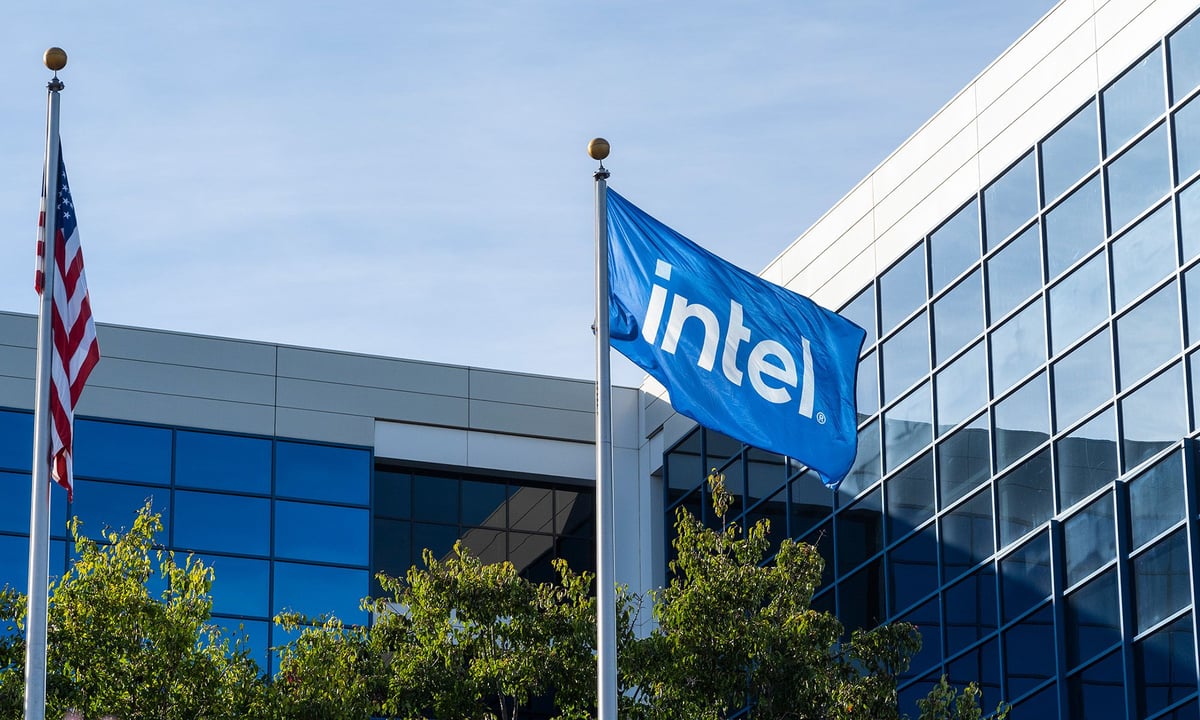
Intel Wins Its First Foundry Customer Intel CEO Lip-Bu Tan announced the company has secured its first external customer for chips made on the 18A process node, a potential turning point for a stock that has fallen 60% since July. The foundry division is now competing with TSMC, which the coverage says cannot meet all AI chip demand, and could offer an alternative to hyperscalers such as Amazon, Google, and Microsoft, which are described as potential candidates for Intel's capacity. Analysts cited in the coverage see potential upside of 76% by 2028 if Intel keeps winning customers and hitting earnings targets—but execution on a new 18A ramp is never guaranteed.
Anthropic Debuts at Record Valuation, Then Stumbles Anthropic's IPO raised about $81 billion (one report puts the figure at $81.3 billion), the largest IPO ever, surpassing SpaceX's previous record. Reports differ on the pace of Anthropic's growth, citing year-over-year revenue growth of either 1,090% or 1,206% depending on the source, and the company remains unprofitable, with one report citing $1.3 billion in operating losses. The stock priced at $115 at the open, according to the coverage, and closed well below that level. Historical data on hyped tech IPOs cited in the coverage suggests an average 55% year-one drawdown is not unlikely, and Anthropic's insider lockup schedule, with 23 separate unlock events, may add selling pressure.
Broadcom Tanked on a Report of Google Chip-Order Cuts Broadcom fell 12.2% on Friday after an analyst report said Google is cutting its planned 2027 orders for Broadcom-designed TPU chips by about 20%, a claim neither company has confirmed. The broader message—that at least one hyperscaler may be rebalancing its AI chip supply—is now a live question for the chip supply chain.
Alphabet's Search Engine Faces Real Competition as AI Spending Hits Core Business
Alphabet stock has plummeted over 30% in six months, capped by a 12% drop after October earnings. The company reported 25% revenue growth but search advertising revenue growth slowed to just 12%, a figure that has raised concerns about AI competition eroding Google's most profitable franchise. The company also posted negative free cash flow of $9.1 billion due to heavy AI capital spending—a signal, per the coverage, that the capex required to stay competitive is not yet translating to profits. Separately, Google is reported to be cutting planned 2027 TPU chip orders from Broadcom by about 20%, which the coverage frames as a sign of recalibrating AI infrastructure plans. At a forward P/E of 18, the valuation looks attractive to the coverage for patient investors, but the slowdown in search ad growth is a live problem the company needs to solve.
Search ad revenue growth fell to 12%, raising concerns about AI competition eating into Google's core business
Negative $9.1B free cash flow due to AI capex suggests the infrastructure spend is running ahead of near-term returns
Stock down 30% in six months after a steep post-earnings drop and strategic uncertainty about AI ROI
Duolingo and Endava Face Securities Suits Over User Growth Claims and Accounting
Duolingo is the subject of securities class action lawsuits alleging the company made false statements about user growth by concealing that increased monetization efforts (more ads, subscription upsells) and lower-quality AI-generated content were damaging daily active user growth rates, contrary to management's claims. Investors who purchased stock between May 2, 2025 and February 26, 2026 may have claims, with a December 7 deadline to join. Separately, Endava plc faces a securities class action alleging material misstatements regarding accounting treatment of customer and supplier agreements, delayed financial results, and questioned internal control effectiveness, with a November 30 deadline for lead plaintiff claims. Both sets of allegations, as described in the lawsuits, claim that management misrepresented business health to investors.
Duolingo lawsuit alleges concealment of user friction from ads and upsells, plus product quality degradation
Endava lawsuit alleges accounting and internal-control issues
Both matters are allegations in pending litigation, not findings of fact
Disney Hits 52-Week High While Netflix Retreats on Streaming Competition and Ad Weakness
Disney has reached a 52-week high, powered by its diversified entertainment portfolio and thriving experiences segment (parks, cruises, and hospitality) that the coverage says has strong pricing power and global expansion. Netflix, by contrast, trades near multiyear lows, down 36.2% year-to-date, as the company faces intense streaming competition, weaker-than-expected advertising revenue, and limited room to raise prices without losing users. Both stocks trade at similar valuations—Disney at 16.4x forward P/E and Netflix at 16.7x—but the coverage argues Disney's moat is broader. Disney's real estate and hospitality assets, combined with pricing power, give it what the coverage calls a cleaner narrative than Netflix's vulnerability to content wars and saturation in developed markets.
Disney benefits from real-world experiences (parks, cruises) with pricing power; Netflix is squeezed by competition and ad weakness
Both trade at similar P/E ratios (16.4x and 16.7x), but Disney's diversification makes the story less binary, per the coverage
Netflix's ability to justify price hikes is limited without a steady stream of hit content in a saturated market
EOG Resources and Energy Stocks Hold Steady Amid Broader Tech Rout
EOG Resources carried a Zacks Rank #1 rating heading into the week, with earnings estimates up 12.1% over 60 days and a dividend yield of 2.8%—above the industry average cited in the coverage. The stock gained 6.7% over six months even as the S&P 500 declined 8.1% over the same period, according to the coverage, a sign of relative strength in a risk-off environment. Energy stocks posted a modest 0.6% loss on Friday, outperforming the broader market. The sector's resilience, per the coverage, reflects both steady oil prices and growing demand for data center power, a tailwind that may support energy stocks even as the AI capex boom faces scrutiny.
EOG has seen a 12.1% earnings estimate increase and carries a 2.8% dividend yield, outpacing broad market weakness, per the coverage
Energy sector down only 0.6% on Friday, outperforming as money moved toward dividend payers
AI data center buildout is cited in the coverage as a long-term power demand driver supporting energy valuations
McDonald's Extends Dividend Streak to 50 Years; Buffett's Successor Doubles Down on Value
McDonald's achieved its 50th consecutive annual dividend increase, joining the Dividend Kings, and announced a 4% hike to $1.93 per share quarterly. The company's business model—combining fast-food franchises with real estate ownership—generates strong cash flow, per the coverage, and has weathered multiple economic cycles. Berkshire Hathaway, under Greg Abel's stewardship, has invested nearly 47% of its roughly $360 billion stock portfolio in just three stocks: Apple (22.3%), American Express (13.3%), and Coca-Cola (11%), a concentrated bet that the coverage frames as reflecting Warren Buffett's long-term value philosophy and notably excluding AI hyperscalers.
50-year dividend streak reflects durable cash generation through economic cycles, per the coverage
Berkshire's concentrated positions in Apple, Amex, and Coca-Cola reflect a value-oriented approach outside AI-related names, per the coverage
SpaceX Faces Lockup Expiration and Competitive Pressure as Rocket Lab Raises Prices
Rocket Lab raised prices on its Neutron rocket 27% to $70 million per launch, even though the rocket has never flown. The move reflects a severe launch capacity shortage following SpaceX's planned retirement of the Falcon 9. Meanwhile, SpaceX will see 797.6 million shares become eligible for trading on December 8, the largest unlock since its August IPO. The stock trades below its IPO price despite recent developments like the successful Starship landing, and the coverage cautions against buying based on short-term price action. SpaceX trades at a premium valuation with execution and regulatory risks, according to the coverage, though demand for launch services is described as far exceeding supply. Competitors like Blue Origin and United Launch Alliance now have strong incentives to fix technical issues and resume operations to capture the elevated pricing.
Launch capacity shortage is so acute that Rocket Lab can raise prices 27% on an unproven rocket
SpaceX's 797.6M share unlock on Dec. 8 could create selling pressure, according to the coverage
Demand for launch services outpaces supply, benefiting all providers but creating valuation risk for SpaceX, per the coverage
Semiconductor Equipment Makers ASML and Lam Research Gain Traction as Chip Race Intensifies
ASML, the only maker of extreme ultraviolet lithography systems essential for advanced chip production, is benefiting from demand that the coverage says is expected to outpace supply through at least 2028. The company posted 36% expected full-year 2026 growth and is considering a 30%-plus capacity increase for 2028. Earnings are expected to triple by 2029 at a 45% annualized growth rate, according to the coverage, and the stock trades at roughly 22x forward P/E. ASML and equipment peer Lam Research are described in the coverage as a way for investors to gain exposure to the AI chip buildout without picking winners among Nvidia, Intel, AMD, and others.
ASML is the sole maker of EUV lithography systems, with demand outpacing supply through 2028, per the coverage
Record Q3 sales and 36% expected 2026 growth; earnings forecast to triple by 2029, according to analysts cited in the coverage
Semiconductor equipment makers are framed in the coverage as a way to benefit from AI capex regardless of which chipmaker wins
Nvidia's Q3 fiscal 2027 results showed revenue more than doubling and gross margin expanding to 74.8%, metrics that the coverage says reflect pricing power and customer lock-in from CUDA and architectural advantage. The company raised its 2028 outlook, signaling management confidence in future growth. Yet the CEO departure has cast a shadow on near-term sentiment. Huang's departure opens a succession question that the market is pricing as risk, even though the underlying business—data center chips, software, and customer relationships—remains intact, per the coverage. Wall Street's 63% average price target over 12 to 18 months implies continued belief in the company's ability to execute, but the leadership change is a real variable investors must weigh alongside the operational performance.
Revenue doubled in Q3 fiscal 2027 with 74.8% gross margin, reflecting pricing power and competitive moat, per the coverage
CEO departure creates execution risk, even as the company raised 2028 guidance and maintains a strong financial trajectory
Wall Street's average upside estimate of 63% over 12-18 months assumes continued customer wins and execution on growth targets
Chosen from companies our screen marks compliant that were in today’s news. A spotlight is not a recommendation to buy.
☕ Quick hits
What else is brewing
Adobe trades at roughly 9x adjusted earnings, down 37% year-to-date, and the business is outperforming its original guidance, according to the coverage; its earnings report, due December 9, may offer an upside surprise given the depressed valuation. ADBE$217.71
Best Buy will report Q3 2027 earnings with analysts expecting 2.4% revenue growth and 6% adjusted EPS growth; watch for holiday guidance and progress in higher-margin Ads and Marketplace businesses.
Alibaba trades at a P/E of 11.19x with 45% year-over-year growth in AI cloud services, but faces intense domestic competition and regulatory uncertainty in China, according to the coverage. BABA$81.08
The coverage notes that the S&P 500 has historically returned 13% over 12 months following past corrections, with Wall Street projecting 32% upside to 9,100 over the next year, according to one analysis.
🧭 Where we’re heading
The AI spending boom has collided with hard questions about returns. Nvidia's CEO departure, Anthropic's IPO stumble, and a reported Google chip-order cut all signal the market repricing risk in Big Tech, according to the coverage. Meanwhile, semiconductor equipment makers and dividend-payers are finding new bidders. Watch whether hyperscalers recalibrate capex plans and whether the recent drop in the 10-year yield presages Fed rate cuts that could stabilize equities.
December 9: Broadcom earnings and the start of Micron's $35.16 billion buyback program
December 8: SpaceX's 797.6 million share unlock; watch for selling pressure given the stock's current discount to its IPO price
Hyperscaler earnings: guidance on AI infrastructure spending and capex plans for signs of rationalization or renewed conviction
Semiconductor equipment earnings: ASML and Lam Research results will show whether the foundry buildout is accelerating or stabilizing
🔤 Word of the day
Capex: Capital expenditure—spending by a company on equipment, infrastructure, and long-term assets meant to generate future revenue. The AI boom has driven record capex at hyperscalers like Google and Amazon, and investor skepticism about returns has weighed on markets, according to the coverage.
Google's negative free cash flow of $9.1 billion in Q3 reflects heavy AI capex, raising questions in the coverage about whether the infrastructure spending will deliver profits to justify the cost.
🧠 Trivia
How much did Anthropic's IPO raise, and whose previous record did it surpass?
Hint: The figure is stated in billions of dollars.
Show the answer
Anthropic's IPO raised about $81 billion (one report cites $81.3 billion), surpassing SpaceX's prior record IPO.
📖 Jargon buster
Correction
A decline of 10% or more from a recent peak in a stock index; multiple reports this week described the S&P 500 and Nasdaq as being in correction territory, though they differ on the exact magnitude of the decline.
Foundry
A semiconductor manufacturing service where a company like Intel or TSMC makes chips designed by others; Intel's first 18A foundry customer win is a step toward competing with TSMC's dominant position.
Gross Margin
Revenue minus cost of goods sold, divided by revenue; it shows how much profit a company makes on each dollar of sales before operating expenses. Nvidia's 74.8% gross margin is exceptionally high, reflecting the value of its chip designs.
Hyperscaler
A large cloud or data center operator (like Amazon, Google, Microsoft) that builds infrastructure at massive scale; hyperscalers' capex decisions now drive demand for chips and power, making their spending plans a closely watched signal.
Lockup Expiration
The end of a period after an IPO during which company insiders are legally restricted from selling shares; SpaceX's December 8 lockup expiration will permit 797.6 million shares to trade freely, potentially creating selling pressure.
Drawn from the last 24 hours of news coverage and checked against the original reports; pictures and links go to the original articles. A company covered here is not a recommendation, and one marked “Not compliant” is covered for context only. Compliance labels are our screen’s output, not a religious ruling. Not financial advice.
Sector heatmap — Friday, Nov 20 close
Technology crashed 7.3% Friday; Consumer Staples alone gained 0.7% while all other sectors fell, with Industrials down 3.1% and Financials off 1.8%.
Consumer Staples+0.7%
Healthcare-0.1%
Energy-0.6%
Utilities-0.7%
Real Estate-1.0%
Financials-1.8%
Materials-2.2%
Communication Services-2.7%
Consumer Discretionary-3.0%
Industrials-3.1%
Technology-7.3%
Signal results, last 48 hours — 56 won, 83 lost (40% won)
Crypto portfolio split: QNT won +3.4%, FET won +1.8%, NIGHT and ZRO each won, but APT lost 2.0%, FIL lost 0.2%, ARB lost 0.6%, and NIGHT logged another loss at 1.4%.
These are the signals we published, graded against the market price when each one closed. They are not real-money trades, and past results do not predict future ones.
Showing 30 of 139; the record above counts all of them.
Stock news
Alphabet and Intel dominated compliant coverage; non-compliant context included Rein Therapeutics lung-function data, Deep Isolation's $20M DOE deal, and Applied Digital's 150 MW lease securing $41B in contracted revenue.